SodaTide Official Website › Blog › Why It Needs A Refrigerator
Why This Bottle Asks For A Refrigerator, And What Happens If You Ignore It
SodaTide’s own directions end with a line most buyers will read once and forget: refrigerate after opening, to preserve the potency of the probiotics. It is the most consequential sentence on the label, it is invisible when it goes wrong, and it should change which pack size you buy.
The instruction, in full
The seller's directions read: take one capsule daily with an 8 oz. glass of water, in the morning and preferably before a meal, and refrigerate after opening to preserve the potency of the probiotics.
Three of those instructions are about how to take it and one is about how to keep it. The fourth is the one with a mechanism behind it that most buyers never hear, and it is also the only one that continues to matter after the bottle is closed again.
- Refrigerate once the seal is broken, not before.
- Back into the refrigerator after every dose, not just overnight.
- For as long as the bottle is in use, which on a six-pack is six months.
- And therefore, in practice, for as long as you own the pack.
Why temperature is the variable
The consensus definition of a probiotic requires the organisms to be live and to be present in an adequate amount. Everything about storage follows from the first of those two words.
Stability work on live cultures examines how long organisms survive in a matrix under different conditions, and temperature is consistently the variable that decides the answer. Cold slows the metabolic processes that kill a dormant organism over time; warmth speeds them up.
Nothing about the fibre half of this capsule cares. Inulin and resistant starch are dry, stable powders and a warm cupboard does them no harm at all. The refrigeration instruction exists entirely for the third ingredient, which is why the label attaches its reason to the probiotics rather than to the capsule.
| Ingredient | Affected by warm storage? | Why |
|---|---|---|
| Chicory root inulin | No | A dry, stable carbohydrate. Ordinary cupboard conditions are fine. |
| Potato resistant starch | No, within reason | A dry granular starch. It is heat during cooking that destroys the resistant property, not shelf temperature. |
| The probiotic blend | Yes, and this is the whole reason for the instruction | Live organisms lose viability over time and lose it faster when warm. |
Three ingredients, one of which drives the entire storage instruction.
The part that makes it easy to ignore
A bottle that has been warm looks exactly like a bottle that has not. There is no colour change, no smell, no clumping and no marking on a capsule that indicates how many organisms are still alive inside it.
That invisibility is what makes the instruction easy to skip and it is also what makes skipping it consequential. With almost any other supplement failure, something is noticeable: a tablet crumbles, a gummy goes hard, a liquid separates. Here the product looks perfect all the way down.
It compounds a problem the category already has. An audit of commercial probiotic products compared label claims with actual bacterial content and found the two agreeing less often than a buyer would assume. Storage is a second, independent way for the number in a bottle to differ from the number on a label, and unlike the first one it is partly under the buyer's control.
What to do if a bottle was left out
This is the question the instruction raises and does not answer, so here is the honest version rather than a reassuring one.
Viability loss is gradual rather than sudden. An afternoon on a kitchen counter is not an event; a fortnight in a sunny conservatory is. The difference between the two is a matter of degree and there is no threshold at which a bottle becomes unusable, which is also why nobody can tell you exactly what you have.
Nothing becomes unsafe. The fibres are unaffected and a warm bottle of dried cultures does not spoil in the way a food does. What changes is how many live organisms are left, and therefore how much of the third ingredient you are actually taking.
- A few hours out: put it back and carry on. Not worth thinking about.
- Several days out: put it back and carry on, and note it, because it is a variable in your own eight-week experiment.
- Weeks in a hot place: the fibre half is intact and the culture half is a question mark. If it happened early in a pack, it is worth raising with the order desk.
- Delivered on a hot doorstep: bring it in, and start the first bottle sooner rather than later rather than leaving the box in a warm hallway.
The one thing not to do is throw a bottle away on suspicion. Two of the three named ingredients are unaffected, and discarding a bottle because of an afternoon on a worktop is a larger loss than the one being avoided.
Why it should change which pack you buy
The pack ladder on this product runs two, three and six bottles, and the price a bottle falls as the pack grows. Read only on price, six bottles is the obvious choice: $49 a bottle against $79.
Read alongside the storage instruction, it is less obvious. A six-bottle pack is a six-month commitment of refrigerator space, and if that space does not exist then what actually happens is that five bottles sit in a cupboard while one is used properly. The saving on the five is not a saving.
This desk would rather say that than sell the larger pack. The pricing page works through the per-day arithmetic, and the honest summary is that the six-bottle rung is the best value on paper and the three-bottle rung is the better first purchase for most people, partly for this reason and partly because ninety days already covers the window buyers here describe.
- Count your refrigerator shelves before you count the saving.
- A bottle in use lives in the refrigerator; the unopened ones can stay in a cupboard.
- Keep the open bottle in the line of sight, not behind anything, because the door opening is also your reminder.
- If you travel, take the bottle rather than decanting capsules into an organiser that will spend a day in a warm bag.
The part of the chain you do not control
The instruction covers the period after the seal is broken. Everything before that is somebody else's, and a buyer has no visibility of it at all.
Between filling and delivery a bottle passes through a warehouse, a carrier and possibly a doorstep in August. None of that is recorded anywhere a buyer can read, and no seal on the pack addresses it. The only lever available is the length of the chain: buying from the seller's own supply route is shorter than buying through a marketplace listing that has been sitting in third-party storage.
That is the honest version of the argument for buying from an official desk, and it is more specific than the usual one about counterfeits. The where-to-buy page sets it out, including what this desk cannot promise, which is anything at all about temperature.
A live-culture product being sold well below the official ladder, short-dated, by a seller who says nothing about storage. In most categories that is old stock and a minor loss. Here it is the ingredient the discount is attached to.
How other products handle the same problem
Live-culture products split into roughly three approaches to viability, and knowing which one a bottle has taken is a quick way to read its seriousness.
| Approach | What the label says | What it tells a buyer |
|---|---|---|
| Refrigerate after opening | An explicit storage instruction, usually with a reason attached | The manufacturer has thought about viability and is being honest that it depends on you as well as on them. This is SodaTide's approach. |
| Shelf-stable formulation | A claim that refrigeration is unnecessary, sometimes with a spore-forming organism named | A formulation decision that can be checked only if the strain is printed. |
| Silence | Nothing about storage at all | Either the problem was solved and not explained, or it was not considered. There is no way to tell from the outside. |
Three approaches. The first and the second are positions; the third is an absence.
Read that way, an inconvenient instruction is a better signal than a convenient silence. A label asking for refrigerator space is a label admitting that its third ingredient is perishable, which most of this category would rather not say out loud.
What the label gets right here
Most of this website's honest analysis runs the other way, so it is worth being clear that this instruction is a point in the product's favour rather than against it.
A great many live-culture supplements say nothing whatsoever about storage. A label that prints the instruction and attaches the reason to it, as this one does, is telling a buyer something true and slightly inconvenient, which is exactly what a label should do.
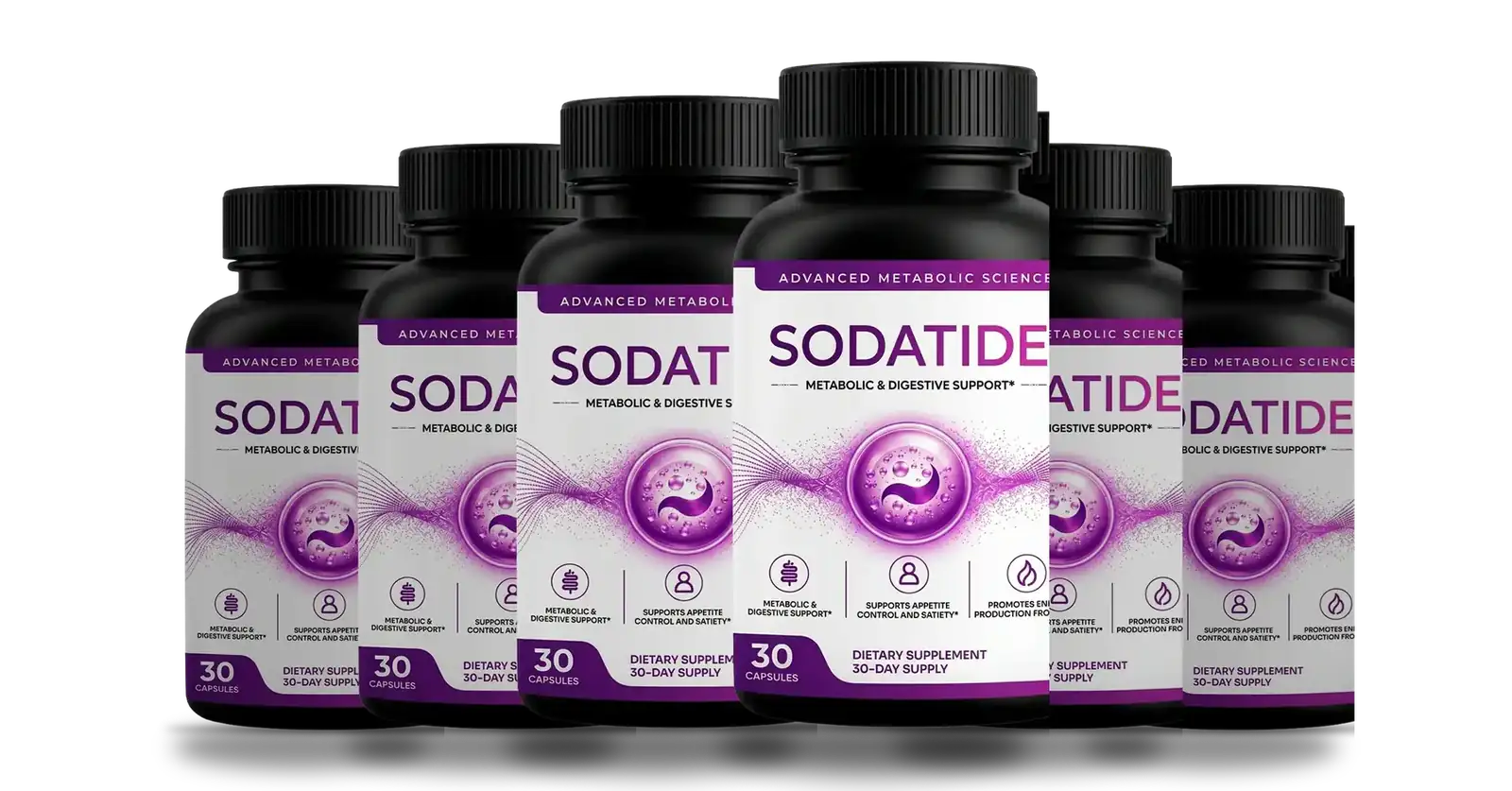
It also sits oddly beside what the same artwork leaves out. A manufacturer who thought carefully enough about viability to print a refrigeration instruction has clearly thought about the organisms, and yet the pack names none of them and gives no count. A trial of a named organism tests 10^10 cells a day; this bottle asks for a refrigerator to protect a number it does not print.
Both of those facts belong on the same page, which is why they are on this one.
Live-culture products have been associated with bloodstream infection in people whose immune systems are suppressed. A documented case involved a patient on immunosuppression. It is rare and it is real, and it is worth a conversation with your own clinician before starting rather than after.
SodaTide is a dietary supplement, not a drug. Nothing on this page treats, cures or prevents anything, and nothing here is medical advice. A persistent change in bowel habit, unexplained weight change, blood, pain or fever are reasons to be assessed by a clinician rather than reasons to start a capsule.
References
- Chaluvadi S, Hotchkiss AT Jr, Call JE, et al, 2012: “Protection of probiotic bacteria in a synbiotic matrix following aerobic storage at 4 degrees C” in Benef Microbes 3(3):175-87, PubMed ID 22968408 — PubMed entry
- Hill C, Guarner F, Reid G, et al, 2014: “Expert consensus document: The International Scientific Association for Probiotics and Prebiotics consensus statement on the scope and appropriate use of the term probiotic” in Nat Rev Gastroenterol Hepatol 11(8):506-14, PubMed ID 24912386 — PubMed entry
- Weese JS, Martin H, 2011: “Assessment of commercial probiotic bacterial contents and label accuracy” in Can Vet J 52(1):43-6, PubMed ID 21461205 — PubMed entry
- Depommier C, Everard A, Druart C, et al, 2019: “Supplementation with Akkermansia muciniphila in overweight and obese human volunteers: a proof-of-concept exploratory study” in Nat Med 25(7):1096-1103, PubMed ID 31263284 (Dose 10^10 live or pasteurised cells a day for three months) — PubMed entry
- Vahabnezhad E, Mochon AB, Wozniak LJ, Ziring DA, 2013: “Lactobacillus bacteremia associated with probiotic use in a pediatric patient with ulcerative colitis” in J Clin Gastroenterol 47(5):437-9, PubMed ID 23426446 — PubMed entry