SodaTide Official Website › How It Works
How It WorksHow SodaTide Works: Fermentable Fibre, Short-Chain Fatty Acids and Appetite Signals
SodaTide works, in principle, by feeding bacteria rather than by acting on you.
Two of its three ingredients pass the small intestine undigested and are fermented in the colon. That fermentation produces short-chain fatty acids, which are absorbed and which influence the hormones that report fullness. The third ingredient adds live cultures to the same environment.
Four mechanisms, each one measured in people, and the point at which the evidence stops.
The first step in how SodaTide works happens in the colon, not the stomach
Most supplements are absorbed. This one mostly is not, and that is the design rather than a flaw. Inulin's fructose units are joined by beta bonds; resistant starch is packed in a crystalline form enzymes cannot get into. Neither is broken down by anything the human small intestine produces, so both arrive in the large bowel as substrate.
That is why the effects take weeks rather than hours. Nothing is entering the bloodstream and acting on a receptor. A bacterial population is being fed, and populations change on the timescale populations change on.
It is also why the water matters. The seller asks for an 8 oz. glass with the capsule, and for a fibre that is sensible advice rather than packaging: a 2025 bowel-habit trial measured stool frequency and consistency as the primary outcomes of inulin supplementation, and both depend on fluid.
What fermentation produces, and why SodaTide points at it
The standard review of colonic function sets out the products: acetate, propionate and butyrate, collectively short-chain fatty acids. Butyrate is used by the cells lining the colon itself. Acetate and propionate reach the liver and the circulation.
Propionate has been tested on its own, which is unusual and useful. A trial in overweight adults used an inulin-propionate ester to deliver propionate specifically to the colon, at 10 grams a day for 24 weeks. Acute ingestion raised peptide YY and GLP-1 and lowered energy intake at the next meal; over the full 24 weeks the supplemented group gained less weight and less intra-abdominal fat than the inulin-only control. A follow-up looked at liver fat in people with fatty liver disease.
That study is the cleanest demonstration in this whole area that the fatty acids are the active part rather than the fibre itself. It is also a reminder of the amount involved: 10 grams a day, every day, for six months.
| Short-chain fatty acid | Where it goes | What it is associated with |
|---|---|---|
| Butyrate | Used by the colon's own lining cells | Barrier integrity and the energy supply of the colonic epithelium. |
| Propionate | Liver and circulation | Appetite hormones, energy intake at the next meal, hepatic metabolism. |
| Acetate | Circulation, peripheral tissues | The most abundant of the three; the least clearly attributable on its own. |
Attributions as the reviews state them, not as this product claims them.
The appetite line on the SodaTide label, and the trials behind it
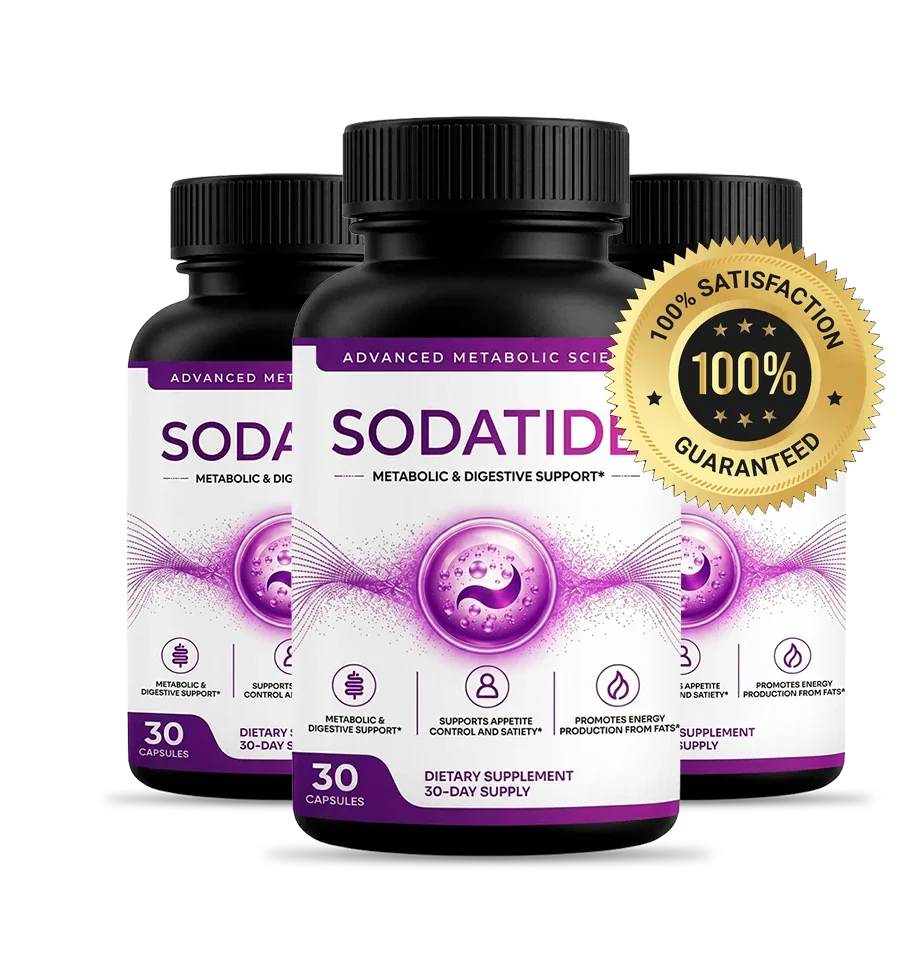
The bottle's second icon caption is about appetite control and satiety. That is the claim with the most direct human evidence of the three, and it is worth seeing what that evidence actually looks like.
A crossover in ten healthy adults gave 8 grams of oligofructose twice a day and recorded total daily energy intake about 5 per cent lower than on the control. A six-week crossover in 35 people with type 2 diabetes used 16 grams a day and measured appetite directly. The 12-week study at 21 grams a day is the one that attached hormone measurements to a weight change, with ghrelin down and peptide YY up.
On the starch side, an acute crossover in overweight men used 48 grams of resistant starch across breakfast and lunch, and a resistant wheat starch trial tested subjective appetite and food intake in healthy adults.
Every figure in the paragraphs above is grams a day. This bottle is one capsule a day carrying three ingredients and no stated weights. The mechanisms are real and they have been measured; the question a buyer has to answer is how much of one arrives in a single capsule, and this label does not let anyone answer it. That is the honest position and it is set out at length on the ingredients page.
The live-culture half of SodaTide, and why it is judged separately
Probiotic effects are not fermentation effects and should not be pooled with them. They are attributed to the organisms themselves: competition for attachment sites, the compounds they secrete, and their effect on the intestinal barrier.
A trial in adults with obesity measured barrier function directly and found Bifidobacterium strains improved it, while the combination with a prebiotic showed no synergism. The Akkermansia study is the most cited single result in this space and tested one organism at 10^10 cells a day for three months. The pooled picture across probiotic trials in overweight and obese adults is a small average effect on body fat.
None of those findings can be read onto a blend that names neither its organisms nor its count, and this site does not read them onto it. They are here because a reader deciding whether the live-culture idea is worth anything deserves to see what the field has actually produced.
Why SodaTide takes weeks, and what the first fortnight feels like
The bacteria that respond to inulin respond within days: the 1999 dose-ranging study measured a faecal bifidobacteria increase after seven days of feeding. What takes longer is everything downstream of that, and the trials that measured appetite, weight or glucose ran six weeks, twelve weeks, sixteen weeks and twenty-four.
The first fortnight tends to be the noisy part. A tolerance crossover at 5 and 7.5 grams a day recorded small rises in bloating, flatulence and rumbling, with composite intolerance scores of 1.9 and 2.3 on a twelve-point scale against 0.4 for control. A separate tolerance study concluded that up to 10 grams a day of native inulin was well tolerated in healthy young adults.
Counter-intuitively, gas symptoms are not a simple function of dose. The 200-volunteer dose-response study found bloating more intense at 2.5 and 5 grams a day than at 7.5 and 10, which is a finding worth holding on to if the first week is uncomfortable. The full picture is on the results timeline.
How this SodaTide page was sourced, and by whom
Sixteen sources behind the four mechanisms on this page. Each carries the amount its trial used, which is the number this label leaves out.
- Topping DL, Clifton PM. Short-chain fatty acids and human colonic function: roles of resistant starch and nonstarch polysaccharides. Physiol Rev. 2001;81(3):1031-64. PMID 11427691. https://pubmed.ncbi.nlm.nih.gov/11427691/
- Chambers ES, Viardot A, Psichas A, et al. Effects of targeted delivery of propionate to the human colon on appetite regulation, body weight maintenance and adiposity in overweight adults. Gut. 2015;64(11):1744-54. PMID 25500202. Dose: 10 g a day of inulin-propionate ester for 24 weeks. https://pubmed.ncbi.nlm.nih.gov/25500202/
- Chambers ES, Byrne CS, Rugyendo A, et al. The effects of dietary supplementation with inulin and inulin-propionate ester on hepatic steatosis in adults with non-alcoholic fatty liver disease. Diabetes Obes Metab. 2019;21(2):372-376. PMID 30098126. https://pubmed.ncbi.nlm.nih.gov/30098126/
- Cani PD, Joly E, Horsmans Y, Delzenne NM. Oligofructose promotes satiety in healthy human: a pilot study. Eur J Clin Nutr. 2006;60(5):567-72. PMID 16340949. Dose: 8 g twice a day, 16 g a day in total. https://pubmed.ncbi.nlm.nih.gov/16340949/
- Birkeland E, Gharagozlian S, Gulseth HL, et al. Effect of inulin-type fructans on appetite in patients with type 2 diabetes: a randomised controlled crossover trial. J Nutr Sci. 2021;10:e72. PMID 34589204. Dose: 16 g a day for 6 weeks. https://pubmed.ncbi.nlm.nih.gov/34589204/
- Parnell JA, Reimer RA. Weight loss during oligofructose supplementation is associated with decreased ghrelin and increased peptide YY in overweight and obese adults. Am J Clin Nutr. 2009;89(6):1751-9. PMID 19386741. Dose: 21 g a day for 12 weeks. https://pubmed.ncbi.nlm.nih.gov/19386741/
- Al-Mana NM, Robertson MD. Acute Effect of Resistant Starch on Food Intake, Appetite and Satiety in Overweight/Obese Males. Nutrients. 2018;10(12):1993. PMID 30558330. Dose: 48 g of resistant starch across breakfast and lunch. https://pubmed.ncbi.nlm.nih.gov/30558330/
- Emilien CH, Hsu WH, Hollis JH. Effect of resistant wheat starch on subjective appetite and food intake in healthy adults. Nutrition. 2017;43-44:69-74. PMID 28935147. https://pubmed.ncbi.nlm.nih.gov/28935147/
- Krumbeck JA, Rasmussen HE, Hutkins RW, et al. Probiotic Bifidobacterium strains and galactooligosaccharides improve intestinal barrier function in obese adults but show no synergism when used together as synbiotics. Microbiome. 2018;6(1):121. PMID 29954454. https://pubmed.ncbi.nlm.nih.gov/29954454/
- Depommier C, Everard A, Druart C, et al. Supplementation with Akkermansia muciniphila in overweight and obese human volunteers: a proof-of-concept exploratory study. Nat Med. 2019;25(7):1096-1103. PMID 31263284. Dose: 10^10 live or pasteurised cells a day for three months. https://pubmed.ncbi.nlm.nih.gov/31263284/
- Pontes KSDS, Guedes MR, Cunha MRD, et al. Effects of probiotics on body adiposity and cardiovascular risk markers in individuals with overweight and obesity: A systematic review and meta-analysis of randomized controlled trials. Clin Nutr. 2021;40(8):4915-4931. PMID 34358838. https://pubmed.ncbi.nlm.nih.gov/34358838/
- Bouhnik Y, Raskine L, Simoneau G, Paineau D, Bornet F. The capacity of short-chain fructo-oligosaccharides to stimulate faecal bifidobacteria: a dose-response relationship study in healthy humans. Nutr J. 2006;5:8. PMID 16569219. Doses: 2.5, 5.0, 7.5 and 10 g a day for 7 days. https://pubmed.ncbi.nlm.nih.gov/16569219/
- Bouhnik Y, Vahedi K, Achour L, et al. Short-chain fructo-oligosaccharide administration dose-dependently increases fecal bifidobacteria in healthy humans. J Nutr. 1999;129(1):113-6. PMID 9915885. https://pubmed.ncbi.nlm.nih.gov/9915885/
- Holscher HD, Doligale JL, Bauer LL, et al. Gastrointestinal tolerance and utilization of agave inulin by healthy adults. Food Funct. 2014;5(6):1142-9. PMID 24664349. Doses: 5.0 and 7.5 g a day over three 21-day periods. https://pubmed.ncbi.nlm.nih.gov/24664349/
- Bonnema AL, Kolberg LW, Thomas W, Slavin JL. Gastrointestinal tolerance of chicory inulin products. J Am Diet Assoc. 2010;110(6):865-8. PMID 20497775. Up to 10 g a day of native inulin and up to 5 g a day of oligofructose were well tolerated in healthy young adults. https://pubmed.ncbi.nlm.nih.gov/20497775/
- Puhlmann ML, Wegh CAM, van der Zalm SCC, et al. Inulin-induced improvements on bowel habit and gut microbiota in adults with functional constipation: findings of a randomized, double-blind, placebo-controlled study. BMC Gastroenterol. 2025;25(1):806. PMID 41233756. https://pubmed.ncbi.nlm.nih.gov/41233756/
Take SodaTide the way the bottle asks
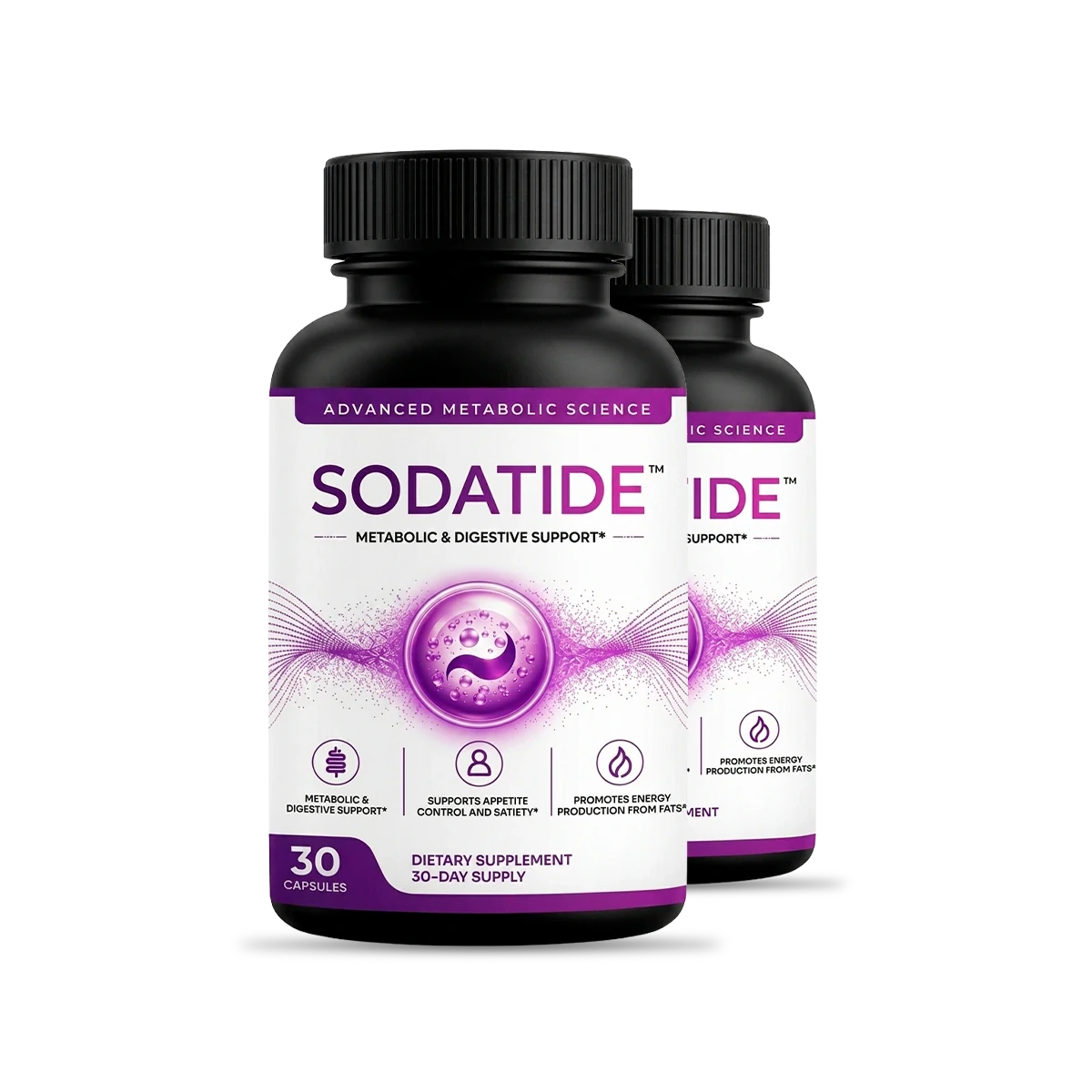
One capsule a day with a full glass of water, thirty to a bottle, refrigerated after opening. Sixty days to decide, administered by this desk.
Two bottles $158 · six bottles $294 · 60-day money-back guarantee
Order SodaTide On The Official WebsiteOne capsule a day · 30 per bottle · lot SOD-26/SO-5430