SodaTide Official Website › Choosing A Metabolism Supplement
Choosing A Metabolism SupplementChoosing A Metabolism Supplement: Eight Questions To Ask Of Any Label
A label in this aisle can be read in about two minutes.
Eight questions, in order, settle almost everything worth knowing: what form it is, what is named, what is weighed, whether a blend hides the amounts, which strains, how many, how it is stored, and who stands behind the seals. Most labels fail on question three.
A method rather than a recommendation, written so that it works on any bottle including the one this website sells.
The eight questions, in order
What form is it, and how often?
A capsule, a powder, a gummy or drops. This decides the amount that can physically be delivered before any other question matters. A scoop can carry grams of fibre; a capsule cannot.
What is named on the label?
Count the named ingredients. A short list is not a bad sign; an unnamed list is. “Proprietary blend” with no members is the weakest possible disclosure.
Is there a weight against every name?
This is the question most labels fail. An ingredient with no amount cannot be compared with any trial, which means the research cited beside it is doing no work.
If there is a blend, what does it hide?
A blend total with the members listed in descending order tells you something. A blend total with no order tells you almost nothing, and a blend with no total tells you nothing at all.
Which strains, if it carries live cultures?
Named to strain, not just to species: “L. gasseri SBT2055” rather than “Lactobacillus”. Strain is the unit the evidence is written in.
How many organisms, and counted when?
A colony-forming-unit count, and ideally a statement that it is guaranteed through the shelf life rather than measured at manufacture.
What does it say about storage?
A live-culture product that says nothing about temperature has either solved the problem or ignored it, and the label is where a manufacturer would tell you which.
Who stands behind the seals?
A GMP mark with an auditor and a number is a signal. A GMP roundel with neither is a picture. The same test applies to every mark on a pack.
What a good answer looks like, and what a weak one looks like
| Question | A strong label | A weak label |
|---|---|---|
| Form and frequency | Stated, with a serving size row | A routine on the marketing page and not on the bottle. |
| What is named | Every ingredient listed | “Proprietary blend” with no members. |
| Weights | An amount against every active | Names with no amounts, or a single blend total. |
| Blend disclosure | Members in descending order with a total | A blend with no order and no total. |
| Strains | Genus, species and strain designation | “Probiotic blend”, or a genus alone. |
| Counts | A CFU figure, guaranteed through shelf life | No count, or a count “at time of manufacture” only. |
| Storage | An explicit instruction | Silence on a product carrying live organisms. |
| Seals | An auditor and a certificate number | A roundel naming a standard and nobody who checked it. |
Eight rows. A label answering six of them well is unusually good in this aisle.
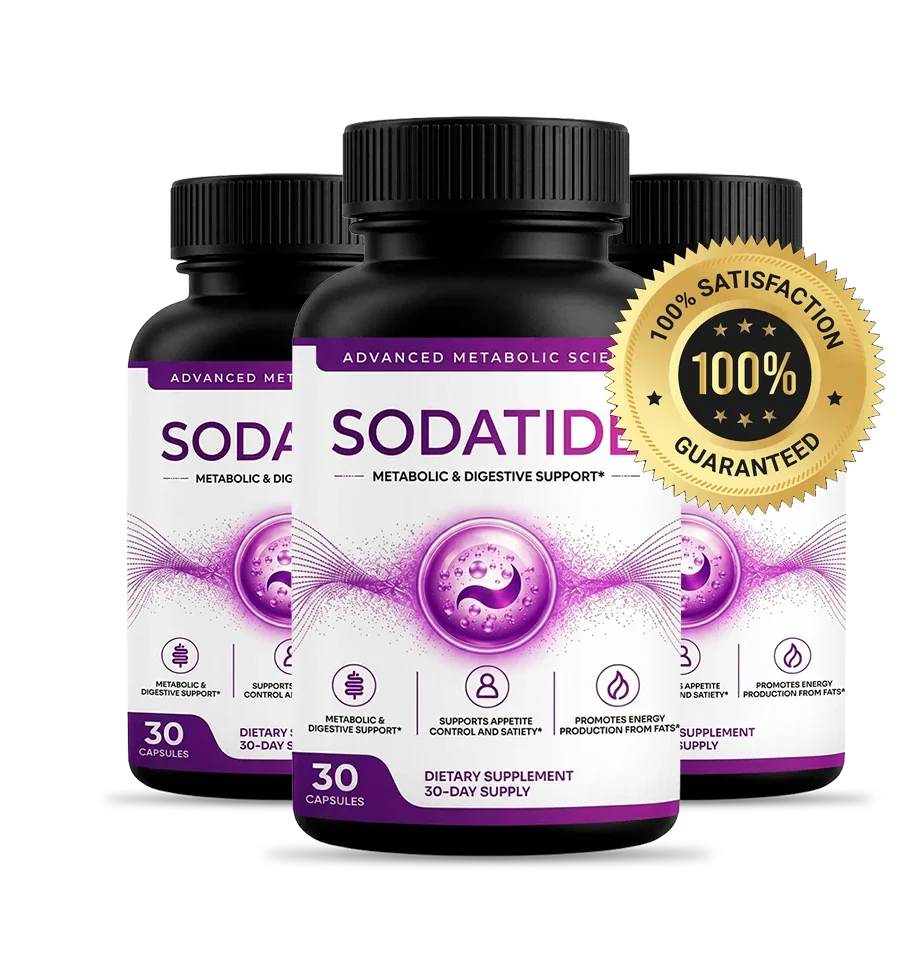
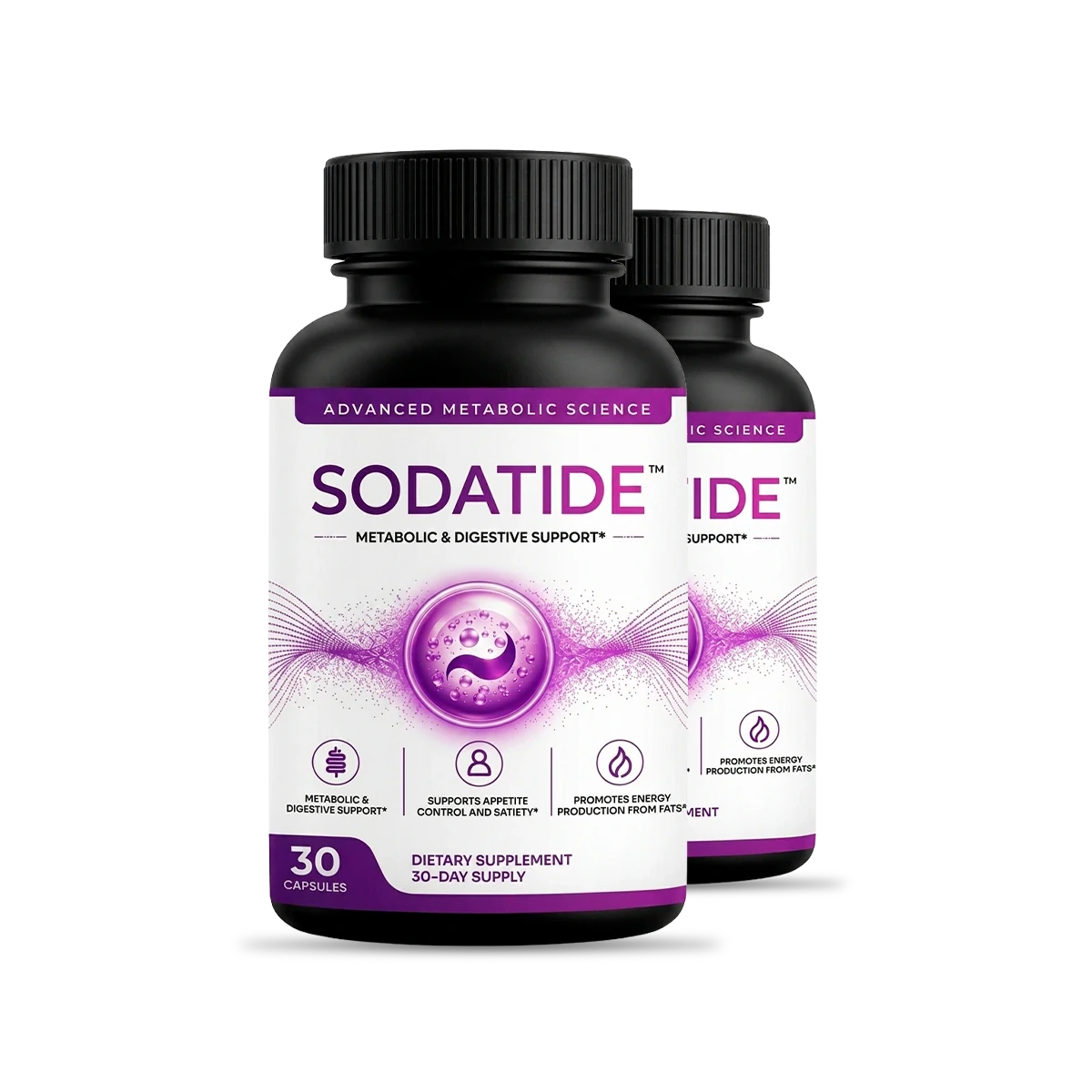
Applying this to the bottle this website sells is instructive rather than flattering. SodaTide answers questions one, two and seven well: the form and frequency are clear, three ingredients are named, and the storage instruction is explicit and unusual. It does not answer three, five or six, and its seals fall on the weak side of question eight. The full reading is on the ingredients page.
Three mistakes that survive this checklist
Reading a citation as a finding about the product
A study on an ingredient is evidence about that ingredient at the amount the study used. Where a label gives no amount, the citation beside it cannot connect to the capsule at all. A 21 g a day trial says nothing about a capsule of unstated weight, however well conducted it is.
Assuming a combination multiplies
Synbiotic products are sold on the idea that a fibre and a culture do more together. A trial that tested it directly gave both, separately and together, and found no synergism. The combination is reasonable; the multiplication is an assumption.
Treating a seal as a test
Manufacturing marks describe a facility and a process. None of them is an assay of the bottle in your hand, and an audit of commercial products is the reason that distinction matters in this particular category.
When the answer is to buy nothing
A guide in this position should be willing to reach that conclusion, so here are the cases where it does.
If your fibre intake from food is already close to the 25 to 29 grams a day the Lancet series associates with lower risk, a capsule adds a rounding error to a number that is already where it should be. Food is cheaper and it brings everything else that comes with it.
If you have a diagnosed bowel condition, a fermentable fibre is a plausible symptom trigger rather than a neutral addition: fructans are one of the groups low-FODMAP protocols remove deliberately. That decision belongs with whoever manages the condition.
And if what you actually want is a countable dose, buy the powder. A scoop is printed, so it can be matched to a trial, and no capsule in this category can make that claim.
The honest summary of this whole guide is that the questions are easy and the answers on most labels are poor. A buyer who asks all eight will not always find a product that passes, and knowing that a shelf is weak is itself a useful result.
How this SodaTide page was sourced, and by whom
Eleven sources behind the eight questions, chiefly the consensus definitions that make strain and dose the right units, and the audit that shows why they have to be printed.
- Hill C, Guarner F, Reid G, et al. Expert consensus document. The International Scientific Association for Probiotics and Prebiotics consensus statement on the scope and appropriate use of the term probiotic. Nat Rev Gastroenterol Hepatol. 2014;11(8):506-14. PMID 24912386. https://pubmed.ncbi.nlm.nih.gov/24912386/
- Gibson GR, Hutkins R, Sanders ME, et al. Expert consensus document: The International Scientific Association for Probiotics and Prebiotics (ISAPP) consensus statement on the definition and scope of prebiotics. Nat Rev Gastroenterol Hepatol. 2017;14(8):491-502. PMID 28611480. https://pubmed.ncbi.nlm.nih.gov/28611480/
- Swanson KS, Gibson GR, Hutkins R, et al. The International Scientific Association for Probiotics and Prebiotics (ISAPP) consensus statement on the definition and scope of synbiotics. Nat Rev Gastroenterol Hepatol. 2020;17(11):687-701. PMID 32826966. https://pubmed.ncbi.nlm.nih.gov/32826966/
- Weese JS, Martin H. Assessment of commercial probiotic bacterial contents and label accuracy. Can Vet J. 2011;52(1):43-6. PMID 21461205. https://pubmed.ncbi.nlm.nih.gov/21461205/
- Chaluvadi S, Hotchkiss AT Jr, Call JE, et al. Protection of probiotic bacteria in a synbiotic matrix following aerobic storage at 4 degrees C. Benef Microbes. 2012;3(3):175-87. PMID 22968408. https://pubmed.ncbi.nlm.nih.gov/22968408/
- Krumbeck JA, Rasmussen HE, Hutkins RW, et al. Probiotic Bifidobacterium strains and galactooligosaccharides improve intestinal barrier function in obese adults but show no synergism when used together as synbiotics. Microbiome. 2018;6(1):121. PMID 29954454. https://pubmed.ncbi.nlm.nih.gov/29954454/
- Parnell JA, Reimer RA. Weight loss during oligofructose supplementation is associated with decreased ghrelin and increased peptide YY in overweight and obese adults. Am J Clin Nutr. 2009;89(6):1751-9. PMID 19386741. Dose: 21 g a day for 12 weeks. https://pubmed.ncbi.nlm.nih.gov/19386741/
- Reynolds A, Mann J, Cummings J, et al. Carbohydrate quality and human health: a series of systematic reviews and meta-analyses. Lancet. 2019;393(10170):434-445. PMID 30638909. https://pubmed.ncbi.nlm.nih.gov/30638909/
- Staudacher HM, Lomer MCE, Farquharson FM, et al. A Diet Low in FODMAPs Reduces Symptoms in Patients With Irritable Bowel Syndrome and A Probiotic Restores Bifidobacterium Species: A Randomized Controlled Trial. Gastroenterology. 2017;153(4):936-947. PMID 28625832. https://pubmed.ncbi.nlm.nih.gov/28625832/
- Depommier C, Everard A, Druart C, et al. Supplementation with Akkermansia muciniphila in overweight and obese human volunteers: a proof-of-concept exploratory study. Nat Med. 2019;25(7):1096-1103. PMID 31263284. Dose: 10^10 live or pasteurised cells a day for three months. https://pubmed.ncbi.nlm.nih.gov/31263284/
- Kadooka Y, Sato M, Imaizumi K, et al. Regulation of abdominal adiposity by probiotics (Lactobacillus gasseri SBT2055) in adults with obese tendencies in a randomized controlled trial. Eur J Clin Nutr. 2010;64(6):636-43. PMID 20216555. Dose: 200 g a day of fermented milk carrying the strain, for 12 weeks. https://pubmed.ncbi.nlm.nih.gov/20216555/
Apply the eight questions to SodaTide
Three named ingredients, an explicit storage instruction, and no weights. The ingredients page works through all eight against this bottle.
Two bottles $158 · six bottles $294 · 60-day money-back guarantee
Order SodaTide On The Official WebsiteOne capsule a day · 30 per bottle · lot SOD-26/SO-5430