SodaTide Official Website › Blog › Resistant Starch And Glucose
What The Resistant Starch Trials On This Site Actually Measured: Glucose And Insulin Markers, Not Weight
The resistant starch citations on SodaTide’s ingredients page are glycaemic-control research, not weight-loss research. Three of them report fasting glucose, insulin, HOMA-IR, HbA1c and inflammatory markers. None of the three reports body weight, appetite or fat mass. That is a narrower and more specific claim than “resistant starch helps you lose weight,” and it is worth reading precisely, because the trials themselves are precise.
Why “glycaemic control” is a narrower claim than weight loss
The ingredients page on this site cites three resistant starch papers that were not designed to test whether a person loses weight. They were designed to test whether resistant starch moves fasting glucose, fasting insulin, a calculated insulin-resistance score called HOMA-IR, HbA1c, and a handful of lipid and inflammatory markers. That distinction sounds like a technicality until you notice how often it gets collapsed in ordinary conversation about gut-health ingredients: a reader sees “improves glycaemic control” in a citation line and reads it as “helps with metabolism,” which quietly becomes “helps you lose weight.” None of those steps is stated in the papers themselves.
This post exists to stop that collapse before it happens. It takes the three resistant starch citations already on this site’s ingredients page that report glycaemic or metabolic endpoints, and states plainly what each one measured, what it found, and what it did not attempt to measure at all. It is a narrower post than a survey of resistant starch as an ingredient class would be, and that narrowness is the point: a reader who wants to know whether resistant starch moves the number on a scale will not find that answer in any of the three papers below, because none of them asked the question.
It is worth being explicit about why this matters on a label like SodaTide’s. The bottle names potato resistant starch and gives no weight for it. The research base behind the ingredient is real and, in places, genuinely positive — but it is positive about glucose and insulin handling specifically, at doses the trials specify, in populations the trials specify. Carrying that evidence over to a claim about body weight is an extra step the evidence does not take, and this site does not take it either.
The 19-trial meta-analysis: glucose and HOMA-IR move, appetite does not appear
Xiong and colleagues pooled nineteen randomised controlled trials of resistant starch against digestible starch, searching PubMed, Scopus and Cochrane through April 2020. Every trial included had to report a glucose- or insulin-related endpoint, which is itself informative: this is a body of research organised around glycaemic outcomes specifically, not a general wellness literature that happens to mention glucose in passing.
The headline result was a significant reduction in fasting plasma glucose: an effect size of −0.09 mmol/L (95% CI −0.13 to −0.04, P = 0.001) compared with digestible starch controls. The effect was larger in two specific subgroups: trials using more than 28 grams of resistant starch a day showed a larger drop (−0.16 mmol/L), and trials running longer than eight weeks showed a larger drop than shorter ones (−0.12 mmol/L). HOMA-IR, a calculated measure of insulin resistance derived from fasting glucose and fasting insulin together, also moved significantly: an effect size of −0.33 (95% CI −0.51 to −0.14, P = 0.001).
What did not move, in this same meta-analysis, is worth reading as carefully as what did. Fasting plasma insulin on its own was not significantly affected. Four separate measures taken from a frequently sampled intravenous glucose tolerance test — insulin sensitivity index, acute insulin response, disposition index and glucose effectiveness — were not significantly affected. Nor was HOMA-β, a related calculation that estimates how much insulin the pancreas is producing. The authors describe the overall picture as a “moderate” effect on glycaemic control, and that qualifier is doing real work: some markers moved, several adjacent ones did not, and nothing in the paper addresses body weight, waist circumference, appetite or fat mass at any point.
| Endpoint | Result | Significant? |
|---|---|---|
| Fasting plasma glucose | −0.09 mmol/L overall; −0.16 at >28 g/day; −0.12 beyond 8 weeks | Yes |
| HOMA-IR | −0.33 | Yes |
| Fasting plasma insulin | Not significant | No |
| Insulin sensitivity index, acute insulin response, disposition index, glucose effectiveness (FSIGT) | Not significant | No |
| HOMA-β | Not significant | No |
| Body weight, BMI, waist circumference, appetite, fat mass | Not reported in this paper | Not measured |
Nineteen pooled RCTs, six glycaemic endpoints, and zero body-composition endpoints. As the paper reports them.
The metabolic-syndrome review: five markers improve, three do not
Halajzadeh and colleagues ran a separate meta-analysis, this one restricted to people with metabolic syndrome and related disorders, pooling nineteen trials found across EMBASE, Scopus, PubMed, Cochrane Library and Web of Science through April 2019. The endpoints pooled were glycaemic status, serum lipoproteins and inflammatory markers — again, not body weight.
Resistant starch administration was associated with a significant reduction in fasting plasma glucose across fourteen studies (weighted mean difference −4.28, 95% CI −7.01 to −1.55), a significant reduction in insulin across twelve studies (WMD −1.95, 95% CI −3.22 to −0.68), and a significant reduction in HbA1c across eight studies (WMD −0.60, 95% CI −0.95 to −0.24). Pooling thirteen studies also found significant reductions in total cholesterol (WMD −8.19) and LDL cholesterol (WMD −8.57). A significant decrease in tumour necrosis factor alpha, an inflammatory marker, was reported as well.
The paper is equally explicit about what did not move: HOMA-IR itself was not significantly affected in this pooling, nor were triglycerides, HDL cholesterol, CRP or interleukin-6. That is a useful contrast with the Xiong meta-analysis above, where HOMA-IR was the marker that DID move significantly. The two papers pooled different, overlapping sets of trials in different populations — general adult trials in one case, metabolic syndrome patients in the other — and arrived at partly different conclusions about which specific insulin-related calculation responds. That disagreement is itself informative: it says the glycaemic evidence for resistant starch is real but not uniform, and a single sentence like “resistant starch improves insulin sensitivity” flattens two meta-analyses that do not fully agree with each other.
| Marker | Change reported | Trials pooled |
|---|---|---|
| Fasting plasma glucose | WMD −4.28, significant | 14 |
| Insulin | WMD −1.95, significant | 12 |
| HbA1c | WMD −0.60, significant | 8 |
| Total cholesterol / LDL | Both significant reductions | 13 |
| TNF-α | Significant reduction | Reported, count not separately stated |
| HOMA-IR, triglycerides, HDL, CRP, IL-6 | Not significant | — |
As reported in the metabolic-syndrome pooling. Body weight and appetite are not among the endpoints this paper pooled.
The low-dose study: fatty acids and bile acids, and nothing about weight
The third resistant starch citation already on this site’s ingredients page, Bush and colleagues’ 2024 paper, sits apart from the two meta-analyses above in an important way: it is a single randomised, double-blind, placebo-controlled trial testing 3.5 grams a day of resistant potato starch for one and four weeks — a dose small enough that it is at least plausible a capsule-scale product could approach it, unlike the 28-gram thresholds discussed above.
What the paper measured was an exploratory post hoc analysis of free fatty acids, bile acids and ketone bodies in stored serum samples from that trial. Resistant potato starch consumption reduced total free fatty acids relative to placebo, including several unsaturated free fatty acids and a compound called octanedioic acid, and it was associated with reductions in two taurine- and glycine-conjugated secondary bile acids. No changes in ketone bodies were observed. The paper’s own framing situates this as evidence for “low doses” having a measurable metabolic effect, where the background literature it cites associates the clearer prebiotic and metabolic benefits of resistant starch with intakes above 15 grams a day.
Two things about this paper are worth stating precisely. First, it did not measure body weight, appetite or any outcome resembling one; the endpoints are free fatty acids, bile acids and ketone bodies, full stop. Second, it is a post hoc exploratory analysis of a small trial, which the authors themselves frame as hypothesis-generating rather than confirmatory. That is not a criticism — exploratory work is how a field finds out what to test next — but it means this citation supports a narrower and more provisional claim than either of the two meta-analyses above, even though its dose is the one closest to what a capsule might plausibly contain.
What none of these three trials measured
Laid side by side, the pattern across all three citations is consistent. Each one is glycaemic, lipid or metabolic-marker research. None of the three reports body weight. None reports waist circumference. None reports appetite, satiety or food intake. None reports fat mass by any method, scan-based or otherwise.
- Measured somewhere in the three papers: fasting glucose, fasting insulin, HOMA-IR, HbA1c, total cholesterol, LDL cholesterol, TNF-α, free fatty acids, bile acid species, ketone bodies.
- Not measured in any of the three papers: body weight, BMI, waist circumference, appetite, satiety, food intake, fat mass by scan or any other body-composition method.
This is not an accident of which three papers happened to get cited. It reflects how resistant starch research is actually organised: a large share of the controlled-trial literature on this ingredient is glycaemic and lipid research, run in people with or at risk of metabolic disease, using fasting blood draws as the primary outcome. Weight-loss trials of resistant starch specifically exist too — this site’s other resistant starch post discusses one, an acute appetite crossover at 48 grams that measured food intake directly — but that is a different trial design answering a different question, and it is not one of the three papers this post is about.
Reading a subgroup finding without over-reading it
Two of the numbers above are easy to misuse, so it is worth spending a paragraph on each. The Xiong meta-analysis found a larger glucose effect at doses above 28 grams a day and at durations beyond eight weeks. That is a subgroup analysis inside a pooled dataset: it describes what the included trials looked like when split by dose and duration, not what any specific untested dose would do. It cannot be read backwards onto a product whose per-capsule dose is undisclosed, and it says nothing at all about amounts below that threshold.
The Bush paper’s low-dose framing runs the opposite risk. Because 3.5 grams a day is a far more capsule-plausible amount than 28 grams, it is tempting to treat this one small exploratory study as proof that a low-dose product works the way the larger meta-analyses suggest a 28-gram-and-up product might. The paper does not support that extrapolation. It is one trial, reporting different endpoints entirely (fatty acids and bile acids rather than glucose or insulin), in a post hoc analysis its own authors describe as exploratory. A single low-dose finding about lipid metabolism is not the same claim as a pooled finding about glycaemic control at a much higher dose, and treating them as interchangeable evidence for the same product would be exactly the kind of collapse this post opened by warning against.
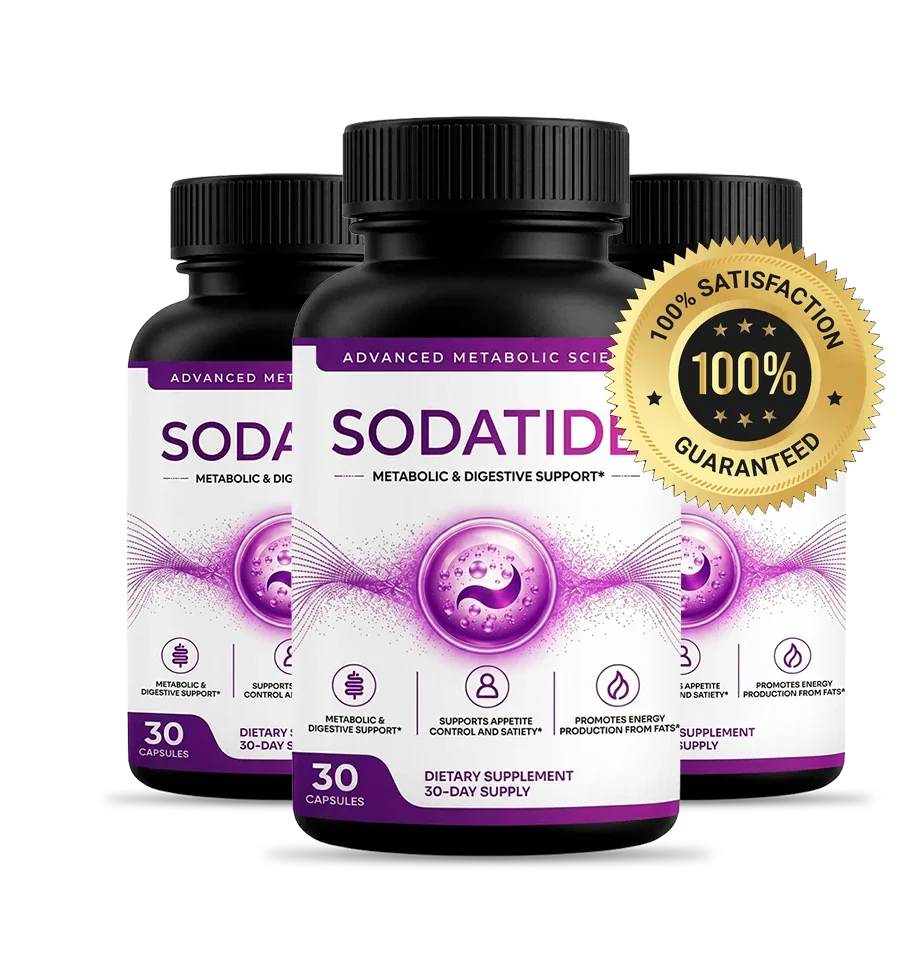
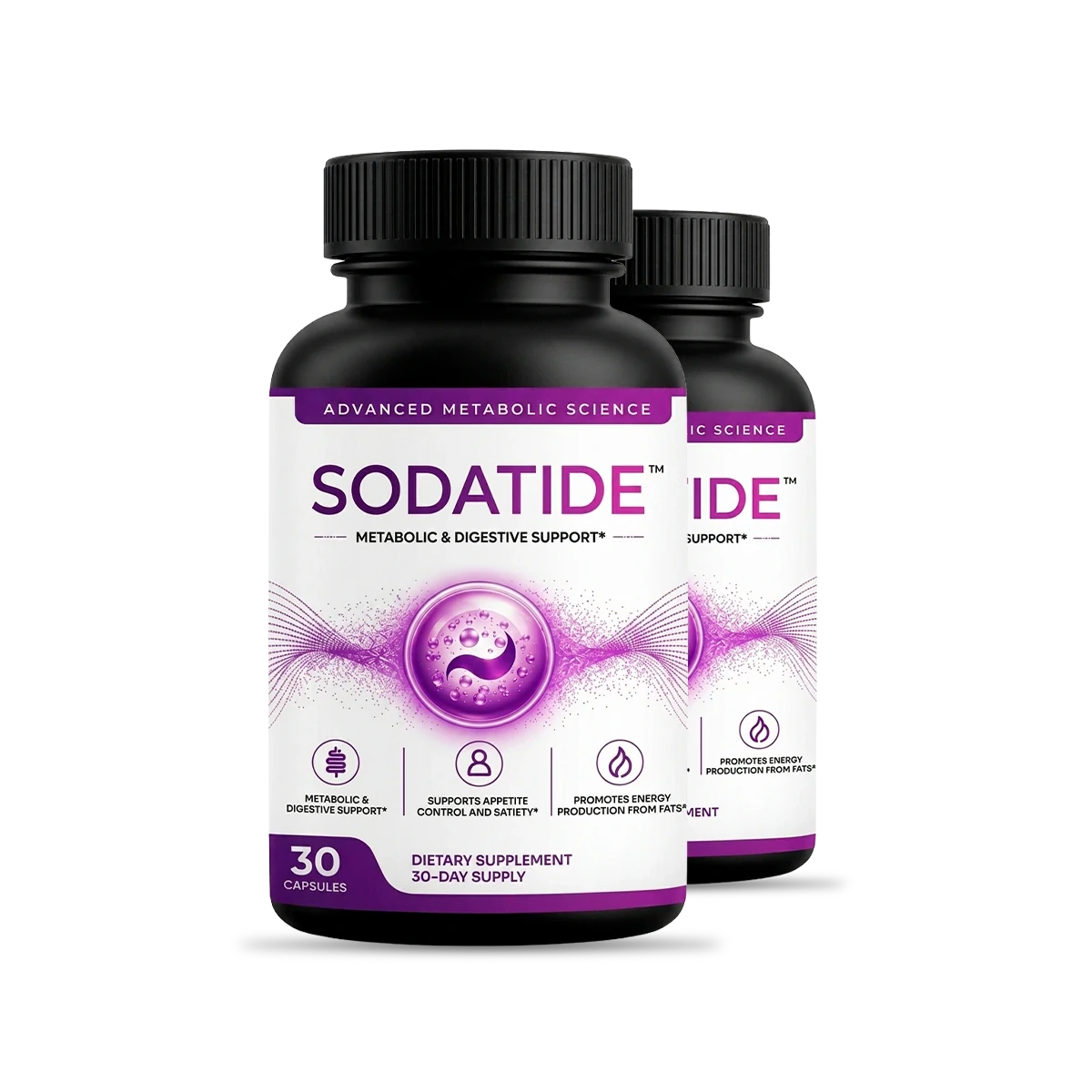
Potato resistant starch is named on the SodaTide label, with no weight beside it
The ingredients page sets the full resistant starch dose range beside the name, including the doses discussed on this page.
Two bottles $158 · six bottles $294 · 60-day money-back guarantee
Order SodaTide On The Official WebsiteOne capsule a day · 30 per bottle
How this differs from this site’s other resistant starch post
The other resistant starch post on this blog is a survey: it walks through the four physical types of resistant starch, the dose literature spread from 3.5 to 48 grams a day across several different trials, and a study that added resistant starch to the diet as food and found a microbiota shift with no change in faecal short-chain fatty acid concentrations. It touches glycaemic control in passing, by way of the same Xiong meta-analysis cited above, but its focus is structural: what resistant starch physically is, and how wide the dose range in the literature actually runs.
This post does something narrower and different on purpose. It takes three specific citations that report glycaemic and metabolic-marker outcomes and states, endpoint by endpoint, what moved and what did not. It is not a survey of the ingredient; it is a close reading of what “the resistant starch evidence shows about glucose and insulin” actually means once the pooled effect sizes are read line by line, and a statement of the outcome measure this evidence does not extend to, which is body weight. A reader who wants the ingredient-class overview should read the other post; a reader who has seen resistant starch described as improving “metabolic health” and wants to know exactly which numbers that claim is standing on should read this one.
What this means for a bottle that names resistant starch and no weight
SodaTide’s ingredients page already states the central fact plainly: the artwork names potato resistant starch and carries no weight for it. Nothing in this post changes that. What this post adds is precision about what the evidence base behind the ingredient actually supports, so that the absence of a printed dose is read correctly rather than filled in with an assumption.
The honest summary is this. There is real, peer-reviewed evidence that resistant starch, taken at specific doses over specific durations, moves specific glycaemic markers — fasting glucose most consistently, HOMA-IR or insulin and HbA1c depending on which pooled analysis and which population you look at. There is no evidence in any of the three papers cited here, or claimed by this site, that resistant starch at any dose produces weight loss, reduced appetite or reduced fat mass; those are different outcome measures, tested in different trial designs, some of which appear on the other post on this blog and none of which this page extends a conclusion to. A reader deciding whether this ingredient is relevant to them should weigh the glycaemic evidence for what it is: evidence about glucose and insulin markers, at doses this label does not disclose, not evidence about the number on a scale.
Three resistant starch citations on this site’s ingredients page are glycaemic and metabolic-marker research. Fasting glucose fell significantly in two separate meta-analyses; HOMA-IR, insulin and HbA1c moved in at least one each; free fatty acids and certain bile acids fell in a third, low-dose trial. None of the three measured body weight, appetite or fat mass, and none of the dose thresholds discussed apply to a capsule whose gram content this label does not print.
SodaTide is a dietary supplement, not a drug. Nothing on this page treats, cures or prevents anything, and nothing here is medical advice. A persistent change in bowel habit, unexplained weight change, blood, pain or fever are reasons to be assessed by a clinician rather than reasons to start a capsule.
References
- Xiong K, Wang J, Kang T, Xu F, Ma A. Effects of resistant starch on glycaemic control: a systematic review and meta-analysis. Br J Nutr. 2021;125(11):1260-1269. PMID 32959735. https://pubmed.ncbi.nlm.nih.gov/32959735/
- Halajzadeh J, Milajerdi A, Reiner Ž, Amirani E, Kolahdooz F, Barekat M, Mirzaei H, Mirhashemi SM, Asemi Z. Effects of resistant starch on glycemic control, serum lipoproteins and systemic inflammation in patients with metabolic syndrome and related disorders: A systematic review and meta-analysis of randomized controlled clinical trials. Crit Rev Food Sci Nutr. 2020;60(18):3172-3184. PMID 31661295. https://pubmed.ncbi.nlm.nih.gov/31661295/
- Bush JR, Iwuamadi I, Han J, Schibli DJ, Goodlett DR, Deehan EC. Resistant Potato Starch Supplementation Reduces Serum Free Fatty Acid Levels and Influences Bile Acid Metabolism. Metabolites. 2024;14(10):536. PMID 39452917. Dose: 3.5 g a day for one and four weeks. https://pubmed.ncbi.nlm.nih.gov/39452917/