SodaTide Official Website › Blog › The Missing Blend Total
Even A “Proprietary Blend” Usually Prints One Number — This Label Doesn’t
A standard proprietary-blend format on a supplement label hides the split between ingredients but still states one combined weight, which gives a reader a ceiling and an average to reason from. SodaTide’s own artwork does not print even that. Not for the probiotic blend, and not for either of the two fibres named beside it. This is a different, and in some ways larger, absence than the missing strain names discussed elsewhere on this blog.
What a standard proprietary blend format actually discloses
A proprietary blend is a common format on supplement labels: several ingredients grouped under one name, without a milligram figure printed beside each individual one. Manufacturers use this format to avoid disclosing a precise formula to competitors, and it is a real limitation for a reader trying to judge a product — if a blend lists five ingredients and one total weight, there is no way to know how that weight is divided among them.
What a standard proprietary blend format still requires, in ordinary supplement labeling practice, is a single combined weight for the whole blend. The ingredients inside it are not individually broken out, but the total is stated. The FDA’s own consumer guidance on dietary supplements describes the Supplement Facts panel as the place amounts are meant to be declared, and a proprietary blend’s total weight is the version of that declaration a blend format still supplies even when it withholds the per-ingredient split.
Why a ceiling and an average matter, even without a full split
A single combined weight is a smaller disclosure than a full ingredient-by-ingredient breakdown, but it is not nothing. If a blend of, say, three organisms is declared at a combined total, a reader immediately has two useful facts even without knowing the internal split: no single ingredient in that blend can exceed the stated total, which sets a ceiling, and dividing the total by the number of named ingredients gives a rough average, which at least bounds the plausible range for any one of them.
Neither figure tells a reader exactly what they are taking. But a ceiling and an average are real constraints, and a reader comparing two products can use them: a proprietary blend declared at 500 milligrams total is a meaningfully different proposition from one declared at 5 grams total, even with the same three ingredients named inside each. That comparison is only possible because a total weight was printed at all.
What SodaTide’s label prints instead
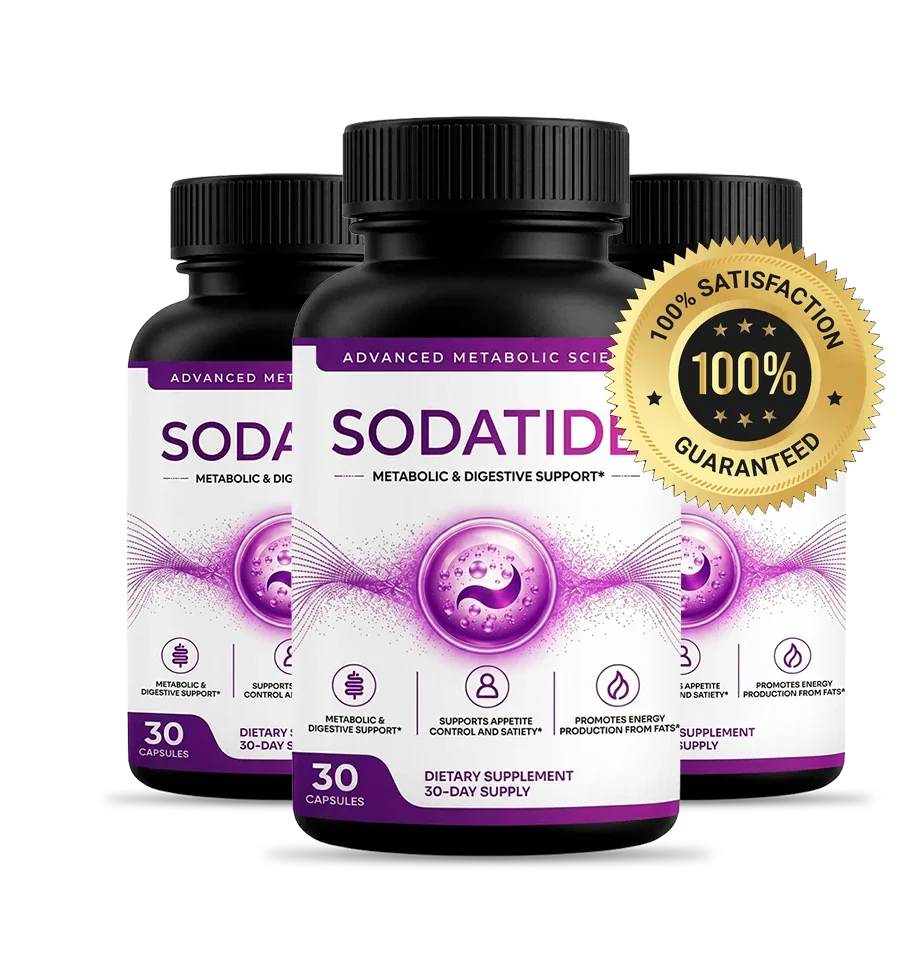
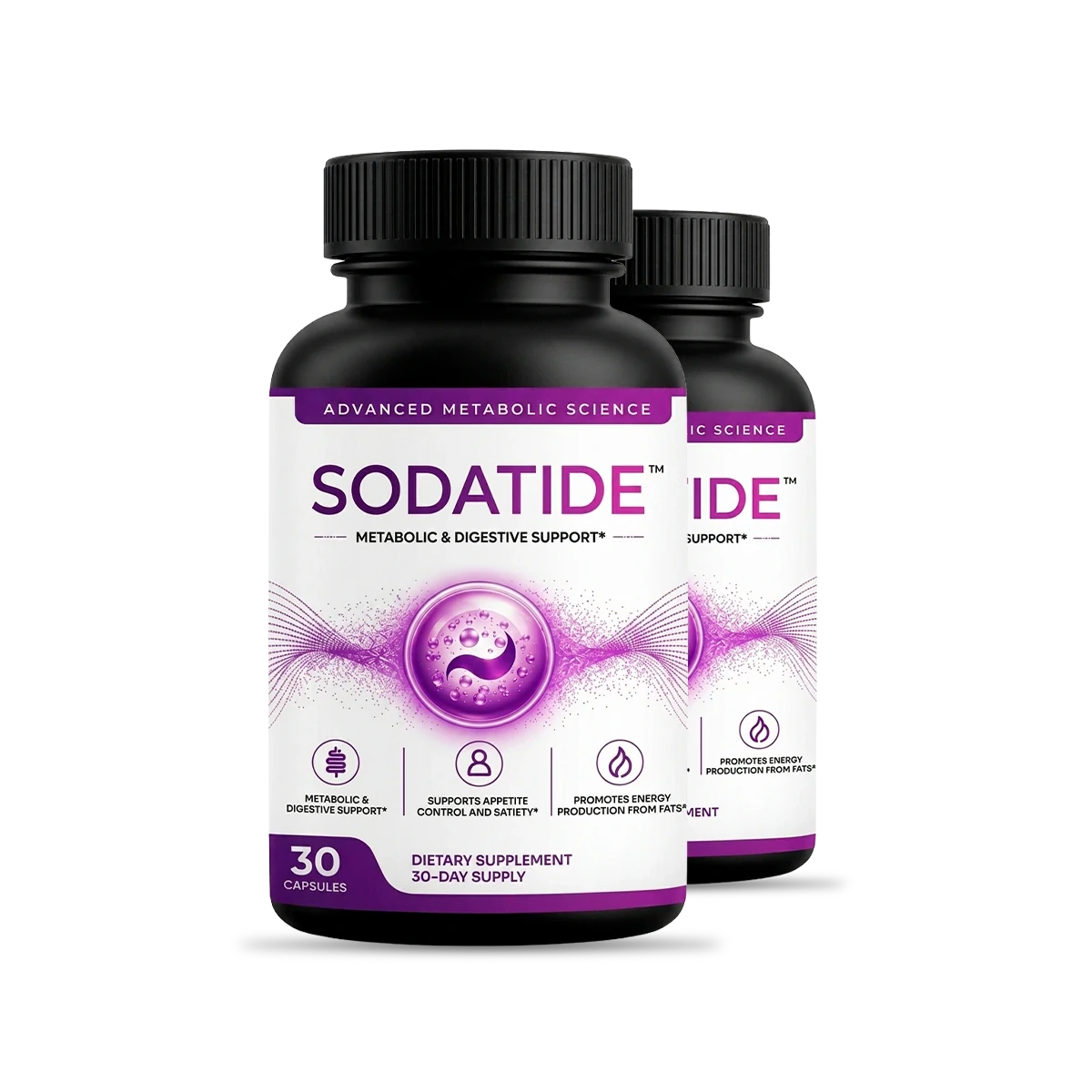
SodaTide’s own ingredients page states this plainly: the artwork supplied with the product is a front label, and it names three ingredients — chicory root inulin, potato resistant starch and a probiotic blend — without weighing any of them. There is no Supplement Facts panel among the images, so there is no serving-size row, no milligram figure for any of the three names, and no colony-forming-unit count for the probiotic component. That absence is not limited to the probiotic blend’s internal composition; it extends to every weight figure on the label, individual or combined.
That is a lower bar than even a standard proprietary blend clears. A proprietary blend, by the description above, still gives a reader one number to reason from. SodaTide’s label, as described on its own ingredients page, gives none — not a combined total for the probiotic blend, and not an individual figure for either of the two fibres named beside it.
| Label format | What is printed | What a reader can work out |
|---|---|---|
| Full Supplement Facts panel | An amount beside every ingredient | The exact quantity of each |
| Standard proprietary blend | One combined total weight for the blend | A ceiling for any single ingredient, and a rough average |
| SodaTide’s label | Three ingredient names, no weight of any kind | Nothing quantitative for any of the three |
Three formats, in descending order of disclosure. This label sits below the proprietary-blend standard, not at it.

Three names, and the amount every published trial used
The ingredients page cannot print what the label withholds, so it prints the trial doses beside each name instead, as the closest substitute available.
Two bottles $158 · six bottles $294 · 60-day money-back guarantee
Order SodaTide On The Official WebsiteOne capsule a day · 30 per bottle
Checking this directly against this site’s own pages
This is not a claim this post is making on trust. The ingredients page’s own checkable-questions table asks “How much of each?” and answers it directly: “The artwork gives names without weights,” with the verification method listed as “Nothing to verify. Ask the seller in writing before buying if it matters to you.” The same page’s honest label analysis section states that the product images give the wordmark, the strapline, three icon captions, the capsule count, the supply length and the three ingredient names — and that there is no Supplement Facts panel among them, so there is no serving-size row, no milligram figure, no colony-forming-unit count and no other-ingredients line anywhere in what was supplied.
A reader can confirm this independently by opening the same product imagery this site works from and looking for a weight figure anywhere on it. There is a wordmark, a strapline, a capsule count and a supply length. There is no number attached to any of the three ingredient names, singly or together.
A sibling label that documents the identical omission
A separate site documenting the same product template states the same absence in its own words, and does so by explicitly comparing this label against the proprietary-blend standard this post opened with. That documentation describes what a Supplement Facts panel is for — a serving size, and an amount beside every ingredient — and then states directly: “Even a blend, which hides the split between ingredients, prints one total weight, and a reader gets a ceiling and an average from it. This label prints no blend total either.” The same page lists the missing pieces one at a time: no amount per serving for any of the three ingredients, no blend total, and no genus, species, strain or colony-forming-unit count for the probiotic component.
That independent documentation of the identical six-line label format matters here for the same reason it mattered in this blog’s post about the label’s one checkable number: it confirms the missing blend total is a consistent feature of how this product is packaged, described the same way from two separate vantage points, rather than a reading unique to one page.
How this differs from the missing-strain-names post on this blog
The existing post on this blog about the unnamed blend is about identity: it argues that probiotic evidence is written strain by strain, that a blend with no organism named cannot borrow anybody’s trial result, and that a strain designation is the unit the published literature is indexed by. That post’s subject is WHICH organisms are in the blend, and the consequence of not knowing.
This post is about a different, specific figure: the TOTAL WEIGHT of the blend, and more broadly the absence of any weight figure anywhere on this label, for any of the three named ingredients. A blend could, in principle, print a combined total weight while still withholding the organism names — that is exactly what a standard proprietary blend format does, and it is a real, if partial, disclosure. SodaTide’s label does not clear even that lower bar. The two posts describe two separate absences on the same label: one is about names, the other is about numbers, and a label can fail on either independently of the other. This one fails on both, and this post is about the second.
What a blend total would give a reader, and what it still wouldn’t
It is worth being precise about how much a blend total would actually help, if this label printed one, because it would not close every gap discussed elsewhere on this site. A combined weight for the probiotic blend would give a ceiling and a rough average, as described above. It would not name the organisms inside it, which is the separate problem the strain-names post addresses, and it would not state a colony-forming-unit count, which is the figure the ISAPP consensus definition of a probiotic treats as the second required half of any probiotic claim, alongside the organism’s identity.
So a blend total, even if this label printed one, would be a partial fix rather than a complete one. The reason this post treats its absence as worth a page of its own is not that a blend total would solve everything; it is that this label does not clear even the modest bar a standard proprietary blend format sets, which is the specific, checkable claim this post set out to verify.
What this means for comparing this product to others in the aisle
SodaTide’s own who it’s for page already tells a reader who wants a countable dose to look for a product sold by the scoop, with a printed amount, or a probiotic capsule with a strain list and a colony-forming-unit count. This post adds a specific reason that advice is worth taking seriously for comparison shopping: a competing product using even a basic proprietary-blend format would give a reader one number — a combined weight — to compare against this one. SodaTide’s label does not provide that number, so there is nothing on this bottle a reader can set beside a competitor’s printed total to judge which offers more.
That is not an argument that the ingredients are wrong or that the product does not work; the ingredients page covers what the published research shows about each named ingredient at length. It is an argument that a specific, ordinary form of comparison — setting one product’s printed blend weight against another’s — is not available on this bottle, because the number that comparison would use is not printed.
There is a second, smaller consequence worth naming. A shopper who has learned to read a proprietary-blend total as a rough guide — treating a low combined weight as a signal to expect less of each named ingredient, and a high one as room for meaningful amounts — has a habit that simply does not apply here. That habit was built on labels that print a number. Applied to this one, it produces nothing, because there is no number to read the habit against. The honest adjustment is not to guess at what the total might be; it is to recognise that this particular comparison tool is unavailable for this particular product, and to rely instead on the trial-dose context the ingredients page prints beside each name.
A standard proprietary blend still prints one combined weight, which gives a reader a ceiling and an average. SodaTide’s label prints none — not for the probiotic blend, and not for either fibre named beside it — which is a lower bar than even a normal proprietary blend clears. This is a different, specific absence from the missing strain names discussed elsewhere on this blog: that post is about which organisms are in the blend, this one is about the missing number for how much of anything is in the bottle at all.
SodaTide is a dietary supplement, not a drug. Nothing on this page treats, cures or prevents anything, and nothing here is medical advice. A persistent change in bowel habit, unexplained weight change, blood, pain or fever are reasons to be assessed by a clinician rather than reasons to start a capsule.
References
- Questions and Answers on Dietary Supplements. U.S. Food and Drug Administration. https://www.fda.gov/food/information-consumers-using-dietary-supplements/questions-and-answers-dietary-supplements
- Hill C, Guarner F, Reid G, et al. Expert consensus document. The International Scientific Association for Probiotics and Prebiotics consensus statement on the scope and appropriate use of the term probiotic. Nat Rev Gastroenterol Hepatol. 2014;11(8):506-14. PMID 24912386. https://pubmed.ncbi.nlm.nih.gov/24912386/
- Weese JS, Martin H. Assessment of commercial probiotic bacterial contents and label accuracy. Can Vet J. 2011;52(1):43-6. PMID 21461205. https://pubmed.ncbi.nlm.nih.gov/21461205/