SodaTide Official Website › Blog › Soda Tide Research
Soda Tide Research: What the Studies Behind Each Ingredient Tested
Soda Tide research means the published studies on its three named ingredients: chicory root inulin, potato resistant starch and a probiotic blend. That research is real and well documented. It was run on single ingredients, in grams a day, over weeks. No published trial has tested the finished capsule. This page sets out what was studied, at what amounts, and how to read it before you buy.
- SodaTide names three ingredients: Chicory Root Inulin, Potato Resistant Starch and a Probiotic Blend.
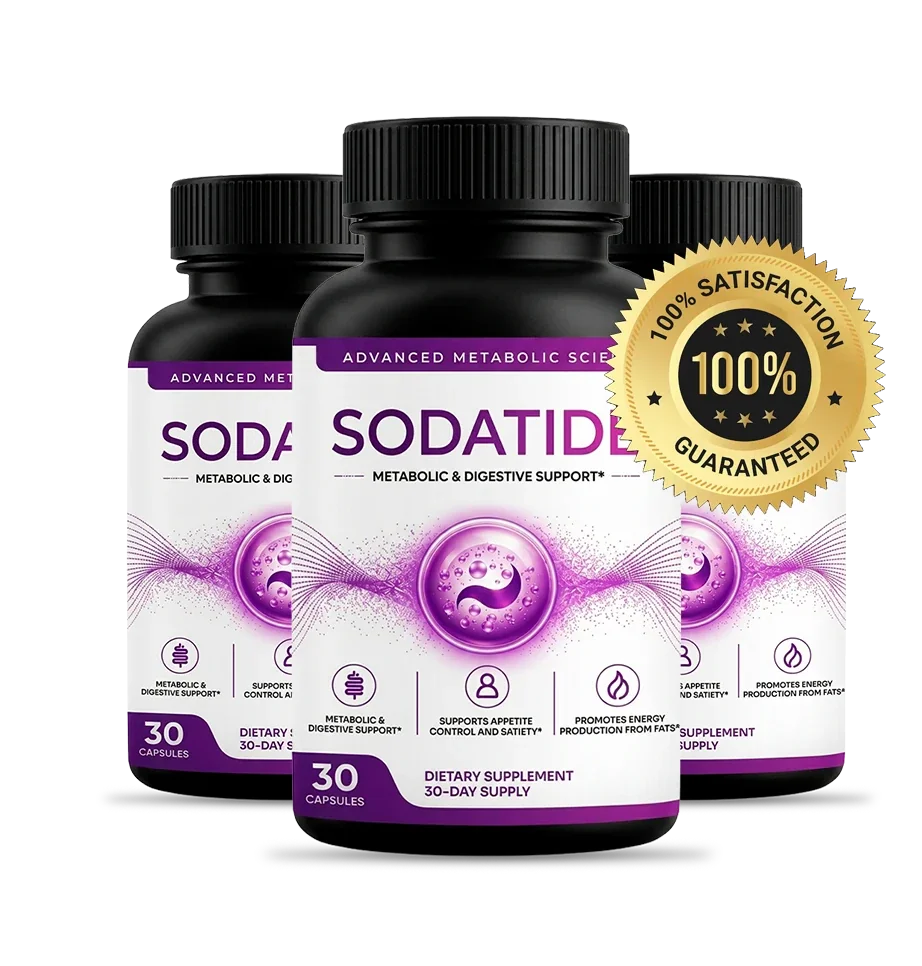
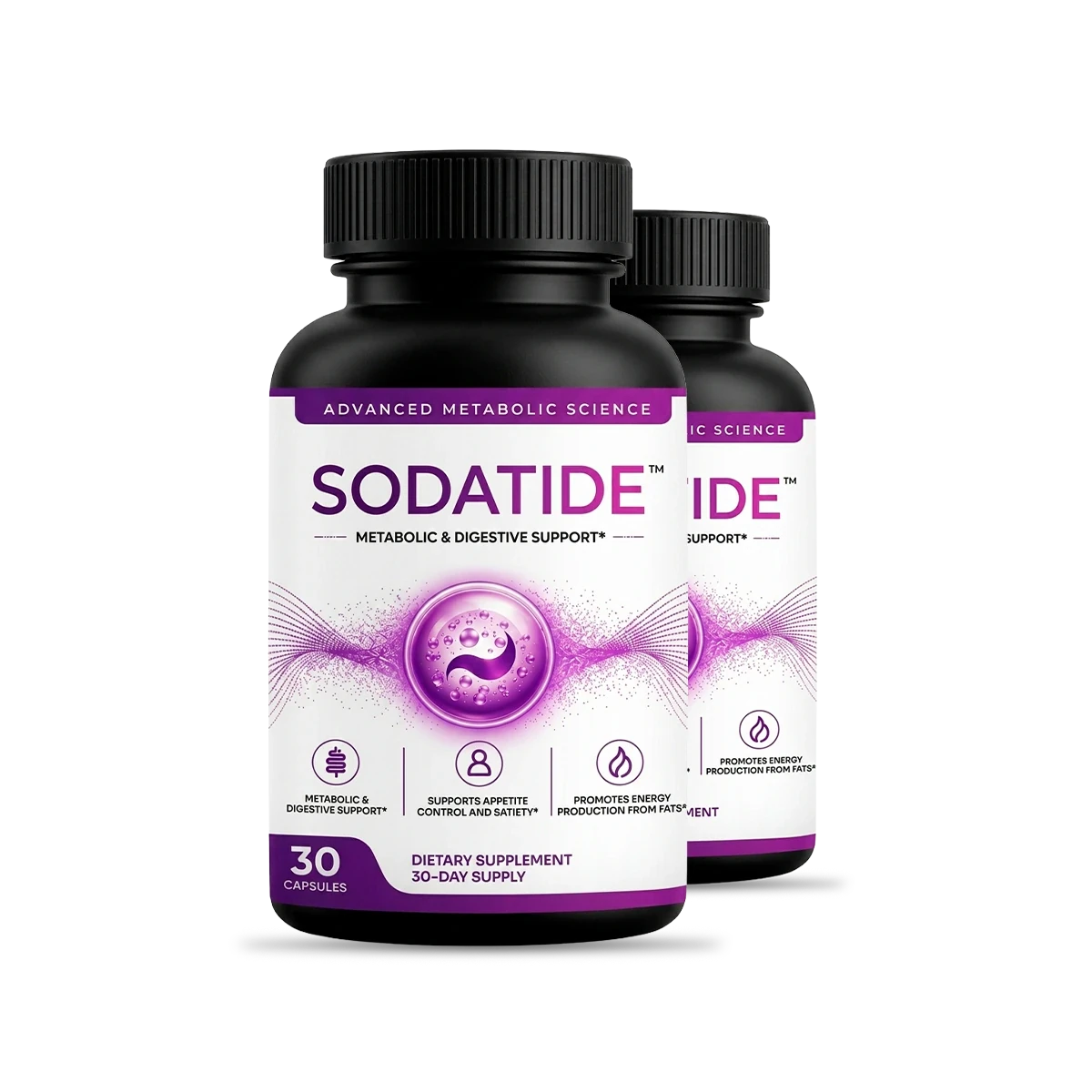
- The label artwork prints no weight for any of them, and there is no Supplement Facts panel in it.
- Chicory inulin trials used 8, 16 and 21 g a day.
- Resistant starch work spans 3.5 to 48 g a day.
- Probiotic trials name one strain and one count. The SodaTide blend names no organism.
- No trial exists on the finished capsule.
What does Soda Tide research actually cover?
When people search for SodaTide research, they usually want to know if there are studies behind it. There are, but they are studies of the ingredients, not of the product. That is normal for a dietary supplement, and it is worth knowing exactly where the line sits.
The bottle names three ingredients. The artwork supplied with the product is a front label: a wordmark, a strapline, three icon captions, a capsule count and a supply length. There is no serving-size row and no milligram figure. So each study below tells you what an ingredient did at a stated dose. It cannot tell you what dose is in a capsule. The ingredients page lists every trial dose beside each name.
Chicory root inulin: the best-studied of the three
Chicory inulin is the reference prebiotic fibre, and its dose-response has been measured rather than assumed. Four amounts recur in the work this site cites.
| Dose | Study | Length | What was measured |
|---|---|---|---|
| 2.5 to 10 g a day | Healthy volunteers | 7 days | Faecal bifidobacteria rose at every dose tested |
| 8 g a day | Children with overweight or obesity | 16 weeks | Body fat measures lower against placebo |
| 16 g a day | Healthy adults | Crossover | Daily energy intake about 5 per cent lower in the fibre period |
| 21 g a day | Overweight and obese adults | 12 weeks | About 1 kg of weight reduction against a control group that gained about 0.45 kg |
Doses and outcomes as the papers report them.
The pooled view is more measured, as it usually is in nutrition research. The 2024 chicory inulin meta-analysis found small, real effects that depend on dose, length and population. Our chicory root inulin post walks through each study.
Potato resistant starch: what the trials used
Resistant starch is starch that escapes digestion in the small intestine and is fermented in the colon, much like a fibre. The work cited on this site runs from 3.5 g a day, in a low-dose analysis, to 48 g in an acute appetite study. The low-dose paper's own framing puts the metabolic effects of resistant starches above 15 g a day.
One more finding matters for any buyer. A 2016 study found that the microbiome response to resistant starch varies a lot between people. The same supplement does different things in different guts. Read more in resistant starch is not just fibre.
Three ingredients, one capsule a day
The ingredients page prints every trial dose beside each name. Sixty days to decide, opened bottles included.
Two bottles $158 · six bottles $294 · 60-day money-back guarantee
Order SodaTide On The Official WebsiteOne capsule a day · 30 per bottle · lot SOD-26/SO-5430
Probiotic research is written strain by strain
Probiotic evidence works differently. Each trial names one strain and one count, because results belong to that strain. The Akkermansia study used 1010 cells a day of a single strain. A Lactobacillus gasseri SBT2055 trial used 200 g a day of fermented milk.
The SodaTide label says Probiotic Blend and names no organism. So no published probiotic trial can be attached to this product, and this site does not describe it as containing any named strain. The full reasoning is in a probiotic blend with no strain names.
How fast the research says things move
The research also gives a sense of timing. The fastest result in the inulin work took seven days, and it was a bacteria count in a stool sample, not something a person feels. Bowel habit is usually the first thing people notice, around weeks three to four. The trials that measured appetite, weight or body fat ran for six to twenty-four weeks.
Buyers on this site most often describe four to eight weeks. The results timeline lays out each stage.
How to use Soda Tide research when you decide
The honest summary has two halves, and both are true. The three ingredients have a real, published research base. And a once-daily capsule is a daily contribution, not a trial dose. Judge it on that basis.
- Read the label claims as the ceiling: metabolic and digestive support, appetite control and satiety, and energy production from fats.
- Give it the weeks the research describes, not days.
- Keep eating fibre from food. Chicory, onions, leeks, cooked and cooled potato and green banana carry the same kinds of substrate.
- Use the 60-day window, opened bottles included, if the habit does not earn its place.
How this site checks each claim is set out in our fact-checking policy.
Frequently asked questions
Has SodaTide been tested in a clinical trial?
No published trial has tested the finished capsule. The research behind it is on its three ingredients, at stated doses in grams a day.
Which SodaTide ingredient has the most research?
Chicory root inulin. Its trials ran at 8, 16 and 21 g a day, and a 2024 meta-analysis pooled the weight management work.
Does the research show how much is in a SodaTide capsule?
No. The label prints no weight for any ingredient, so the studies show what an ingredient did at a dose, not what one capsule holds.
The bottom line
Soda Tide research is a fair search, and the answer is clearer than most. The ingredients are well studied. The studies used grams a day over weeks. The capsule itself has not been through a published trial. Knowing all three lets you set fair expectations.
Sources: Nicolucci and colleagues, 2017: 8 g a day for 16 weeks in children · Cani and colleagues, 2006: oligofructose at 16 g a day, satiety crossover · Parnell and Reimer, 2009: oligofructose at 21 g a day for 12 weeks · Reimer and colleagues, 2024: chicory inulin-type fructans meta-analysis · Bouhnik and colleagues, 2006: 2.5 to 10 g a day for 7 days · A low-dose resistant potato starch analysis · An acute appetite crossover at 48 g · Variable responses of human microbiomes to resistant starch, 2016 · The Akkermansia proof-of-concept study · A 12-week Lactobacillus gasseri trial.
Keep reading: SodaTide ingredients · how SodaTide works · the official order page
SodaTide is a dietary supplement, not a drug, and it has no FDA approval, as no dietary supplement does. Nothing here is medical advice. A persistent change in bowel habit, unexplained weight change, blood, pain or fever are reasons to be assessed by a clinician rather than reasons to start a capsule.